

Exit

Author Archives: Compressed Air Systems

  1. 7 Applications of Compressed Air in Industrial Fleets

    Comments Off on 7 Applications of Compressed Air in Industrial Fleets

    Compressed air—i.e., air contained at higher pressures than that of the surrounding environment—plays a critical role in a wide range of industrial applications, including fleet management. For fleet management, industrial vehicle managers, drivers, and technicians rely on compressed air to assist with vehicle maintenance and other essential tasks. Additionally, the vehicles themselves require compressed air to serve as power systems for a wealth of important functions.

    Seven Common Applications of Compressed Air in Industrial Fleets

    Compressed air finds use in several fleet maintenance applications. Seven of the most common applications are:

    1. Under-hood Engine-mounted Rotary Screw Air Compressors

    Optimizing space utilization within a fleet is essential to achieving maximum efficiency and convenience. Under-hood engine-mounted rotary screw air compressors allow industry professionals to mount the equipment beneath the hood, allowing them to save hitch or deck space for other machines and materials.

    2. Generators

    Many fleet managers use compressed air to help generate power for maintenance operations. Both stationary and diesel-driven tow-behind units function excellently as portable generators.

    3. Multi-function Compressors

    Compressors are available in several variations, including compressor/generator power systems, compressor/generator/welder systems, and compressor/hydraulic systems. Multi-function compressors offer fleet staff 6-in-1 power systems that include:

    • Air compressors
    • Generators
    • Welders
    • Battery boosters and chargers
    • Power take-offs (PTOs)
    • Cold climate kits

    Systems like these serve several purposes within an industrial fleet, such as cutting down on vehicle weight, maximizing storage space, streamlining air compression operations, and reducing fuel costs.

    4. Under-deck Compressors

    Under-deck compressed air systems rely on two sources to generate power: the vehicle’s engine and a single power take-off opening. They can produce up to 1,000 cubic feet per minute of air power and provide hydraulic and/or AC power. As they are mounted beneath the industrial vehicle, when employed, they are more aesthetically pleasing than other compressor models.

    5. Hydraulic Pump Combos

    For facilities that work with hydraulic crane trucks, hydraulic pump combos can benefit their operations. A majority of crane trucks need specialized air compression systems that remain separate from the truck engine to maximize field results. Virtually any diesel truck’s fuel system can be altered via the integration of a self-contained hydraulic pump.

    6. Welders

    Compressed air systems facilitate high-frequency DC welding up to 300 AMP. In addition to allowing for portable, on-site welding, such systems also feature auto-speed controls with CV MIG capabilities.

    7. Battery Boosters

    Battery boosters are devices used to jump-start vehicles with discharged or dead batteries. When industrial vehicles are dispatched for critical applications, they are crucial to the success of the project as they minimize the risk of long-term, unplanned shutdown. When choosing a booster, there are several factors to consider for optimal effectiveness in the intended application, including its:

    • Total power output
    • Battery shelf life
    • Amount of electricity output on a single charge

    Fleet and Maintenance Air Compressor Solutions From Compressed Air Systems

    At Compressed Air Systems, we’re proud to offer our customers a range of air compressor systems for industrial fleet and maintenance applications. We carry and distribute some of the industry’s top brands, including:

    • VMAC®
    • VanAir®
    • Compressed Air Systems
    • Kaeser MOBILAIR™ (portable compressors)
    • Champion

    One of our most popular products is the VMAC Underhood™ compressor. As these compressors integrate seamlessly into the design of a truck and fit beneath the hood, they allow organizations to reduce costs and storage utilization compared to traditional portable air compressors. Our clients utilize them for powering:

    • Jackhammers
    • Snow wands
    • Air jacks
    • Lube systems
    • Pneumatic tools

    Mobile Power Systems for Fleet and Portable SystemsDue to our over five decades of experience selling, servicing, and renting pneumatic tools and equipment, many companies turn to us for assistance with their fleet management needs. Our expert team has provided reliable fleet management services to many major companies, including Vactron, Cues, SpaceX, and Sarasota County.

    Interested in learning more about our compressed air solutions? Contact us today or download our eBook, “Mobile Power Systems for Fleet and Portable Systems”, to learn more about compressed air applications in industrial fleets.

    Download the Mobile Power Systems eBook

  2. Industrial Air Compressor Solutions in Florida: Success Stories and Reviews

    Comments Off on Industrial Air Compressor Solutions in Florida: Success Stories and Reviews

    Customer's reviews

    Compressed Air Systems offers compressed air solutions in Florida, and we’re proud to provide high-level service to ensure your systems are operating efficiently.

    Our Success Stories

    Lockheed Martin: Melbourne, FL

    Like many companies, Lockheed Martin wanted to lower utility costs in their facility. Their nitrogen system was costing more than $20,000 a month in storage, fees, and more.

    The engineer in charge of the project wanted to replace that system with an oil-free air compressor and brought the idea to CAS. Sales Manager Kyle Randall took on the assignment and quickly realized there wouldn’t be enough space to install the compressor in the facility. This was going to require a custom solution.

    CAS delivered a turn-key solution:

    • Randall and the CAS team designed a portable room to accommodate the oil-free system
    • The system performed as intended from the first day
    • When tested by third-party lab technicians, no hydrocarbons or particles were found in the air
    • It paid for itself within four months

    Maaco Auto Body Shop: Orlando, FL

    Meanwhile, at Maaco Auto Body Shop, their 30-horsepower air compressor was not performing reliably. The compressor room was too hot; the heat wasn’t being properly ducted away from the area.

    Since Maaco had worked with CAS before, they knew we could help them. Jeff Guzzo, our Orlando area sales engineer, suggested two 15 hp Kaeser SM15 air compressors as an alternative to Maaco’s aging system:

    • One compressor was capable of supplying enough air on a daily basis
    • The second compressor was to serve as a backup, which would engage as needed
    • The team also made the appropriate improvements to the ductwork
    • Maaco has saved about $300 per month with the CAS system

    Reviews From Our Florida Customers

    At CAS, we are proud of the work we do and love knowing our customers are happy. These are just a few of our Florida clients’ reviews:

    Samuels Auto Corp: Sanford, FL

    “Your technician, Pete, went above and beyond for us. My machine was on its last leg and he took all the extra time to restore it as best as possible. He took the time to explain everything in detail. He did an amazing job!”

    Environmental Services Department Company: City of Largo, FL

    “We were having issues with our aging air compressor and in need of replacement. We searched compressor companies online and found Compressed Air Systems Inc. located in Tampa, FL. After calling the number, I was immediately connected to a salesperson—Bo Wenrich of Compressed Air Systems, who showed up at my location within an hour.

    The inside sales rep, Jack, stayed on top of all communication, making sure the unit arrived on time and had delivered to the location in Tampa for all to be coordinated. Compressed Air Systems took care of all coordination between a Contracted Electrician and installation group.

    I would recommend Compressed Air Systems to anyone…looking for a Quality Turn Key Experience!”

    The Hill Group: Vero Beach, FL

    “I wanted to make you aware that your installation crew and Levi Combs were professional on every level. They did an outstanding job installing my new Kaeser compressor, tank, and dryer.

    The 15 horsepower Kaeser with dryer and 400 gallon wet tank is truly amazing. From the ease of operation to how beautifully quiet the Kaeser is, down to the air quality has surpassed my expectations. I have done my research on compressors and wasn’t going to settle until I had the best. I now know my research and time has paid off.”

    Contact Us About Our Air Compressor Solutions

    Since 1963, CAS has been providing compressed air solutions in Florida. Over the years, we’ve enjoyed the opportunity to serve many happy customers, and we look forward to continuing this tradition of top-notch customer service and custom solutions. For a personalized review of your current system, we invite our Florida customers to sign up for a free walk-through consultation to learn more about how to reduce costs and improve efficiency.


  3. Compressed Air System Capabilities for the Plastic Industry

    Comments Off on Compressed Air System Capabilities for the Plastic Industry

    The plastic industry in the United States accounts for $380 billion in shipments every year and has created 885,000 domestic jobs. It’s the third-largest manufacturing industry in the country.

    Industry-leading plastic manufacturing plants use air compressors because they are the best at providing precise, reliable, and efficient power to manufacture high-quality plastics safely and consistently. In fact, air compressors have become the standard tool for delivering power.

    Compressed Air Systems for the Plastic Industry

    Why Use Air Compressors in the Plastic Industry?

    Plastic manufacturing requires precise operations to ensure the product holds a strong, durable shape. Every facility’s power delivery system must be fine-tuned, so it can operate during delicate stages of the process. At the same time, plastics plants need consistent access to energy-efficient power solutions that allow them to operate within stringent efficiency regulations.

    Air compressors strike the balance between three competing requirements in plastic industry facilities: precision, reliability, and energy efficiency.

    Precision

    While current technology can minimize fluctuations in electrical currents, it can’t stop them entirely. Pneumatic air compressors stabilize the flow of power into equipment and processes by absorbing the fluctuation. Air compressors can also be tightly controlled to deliver precise levels of power and pressure at each manufacturing stage.

    Reliability

    Air compressors are a main utility for plastic processing plants and having a premium air compressor is worth the investment. Without interrupting production of their compressor air demands, a second compressor is vital for reliability.

    For example, in dusty or dirty manufacturing conditions, air compressors can perform more reliably than other tools. A properly maintained air compressor will perform more reliably. They can also maintain consistent performance during temperature fluctuations and adverse weather conditions when properly equipped with correct options.

    Energy Efficiency

    Due to increasing concerns about energy production, greenhouse gases, and climate change, manufacturing facilities are under intense pressure to operate more efficiently. Air compressors help generate power in a way that is both cost-efficient and compliant with energy consumption regulations.

    Finding the Proper Air Compressor for the Plastic Industry

    Every plastic manufacturing plant is slightly different and operates in varied conditions, which means they need the right air compressor for their unique solutions. Selecting one while constructing a new manufacturing facility or retrofitting an existing plant for air compression power is absolutely essential to maximize all the benefits of pneumatics.

    Some important considerations include:

    After the Sale Support

    You need an air compressor that is easy to use and shows immediate results after installation. It’s also important to find manufacturers that offer warranties, service guarantees, and support after the initial purchase and installation. Look for manufacturers that:

    • Offer diagnostics, support, and maintenance
    • Have easy-to-reach customer service lines
    • Have a wide distribution network for parts and servicing

    Quality Construction

    Air compressors need to have high-quality construction to remain durable and energy-efficient throughout years of industrial use. They need:

    • Innovative design
    • Totally enclosed fan cooled (TEFC) motors with class F insulation
    • Service friendly construction
    • Guaranteed efficiency
    • Magnetic wye-delta reduced voltage starting
    • Efficient separator system
    • Low sound and vibration
    • CAGI (Compressed Air & Gas Institute) certified performance
    • Monitoring and maintenance controllers

    Looking for well-made air compressors, even if they have a higher initial cost, can save your facility time and money on repairs, downtime, leakages, and energy waste.

    Smart Analytics

    No matter how large your facility is, employing your air compressor with smart analytics technology can help it stay on top of potential malfunctions, leaks, and surges in energy consumption. Smart systems gather data about:

    • Potential areas with wasted electrical use
    • Developing strains in the system
    • Aggregate electrical consumption to ensure your facility is staying compliant with energy use regulations

    Contact Compressed Air Systems Today to Learn More

    If you’re constructing a new plastics manufacturing facility or retrofitting a plant to use air compressors, contact Compressed Air Systems today. Our team will help you find the best air compressor and control systems for your needs.

  4. Celebrating Kaeser’s 100th Anniversary

    Comments Off on Celebrating Kaeser’s 100th Anniversary

    At Compressed Air Systems, Inc., we have been proud to work with Kaeser for 30 years. We have had a long and productive business partnership, and we are especially delighted to honor Kaeser as they celebrate a spectacular milestone: their 100th anniversary!

    The two companies have a long history in common as dependable family operations. Kaeser Kompressoren was founded by Carl Kaeser Sr. in Coburg, Germany in 1919. Compressed Air Systems was founded in 1963 in Mulberry, FL, by Mr. Richard Hall. Both companies are proud to be family-owned and -operated.

    Kaeser met this impressive milestone because of their holistic approach and commitment to sustainable development as a company. Their air compressors are some of the best in the business, and they remain dedicated to innovation and quality. Their employees’ hard work and the business partnerships they have established around the world have given their business staying power and the ability to continue growing.

    Today, they have expanded operations in more than 100 different countries and they have over 6,000 employees. Even as they grow, Kaeser has firmly remained family-owned and -operated. In 1985 Thomas Kaeser, the grandson of Carl Kaeser Sr., joined his father at the company, becoming the third generation of Kaesers at the helm. Thomas and his wife, Tina-Maria Vlantoussi-Kaeser, continue to manage the company today.

    We salute Kaeser’s well-deserved success and a century of efficiency, reliability, and innovation.

    Our Partnership With Kaeser

    Compressed Air Systems, Inc. began doing business in 1963 with only five employees. Over the years, we have steadily grown and now employ over 50 people. Our thriving business operates out of our 30,000 square foot facility in Tampa, FL, with a 4,000 square foot facility in Orlando, FL, serving central and east coast FL. We carry a wide range of products and specialize in air compressors, blower, and vacuum systems. Our sales, installation, in-house service, and rental departments combine to make an unbeatable team.

    At Compressed Air Systems, we are proud to be celebrating our 56th year. As we look back over our history, we are glad that we have been partners with Kaeser for the last 30 years. Kaeser Compressors first came into the U.S. market in the early 1930s. Years later, when we first became aware of Kaeser, we were immediately impressed with the innovative design of their compressors, and we joined forces enthusiastically.

    Now more than 30 years have passed, and Kaeser is at the top of their field and one of the most highly respected manufacturers in the business. Their air compressors are known to be the best available. Because we are well aware of their unstinting commitment to excellence, we are proud to be an authorized dealer. We carry a wide selection of Kaeser makes and models. Whether you’re looking for a small, portable model or a large version that provides hundreds of horsepower, we have the compressor, vacuum pump or blower you’re looking for.

    Learn More About Kaeser’s Air Compressors

    Compressed Air Systems, Inc. is thrilled to congratulate Kaeser on 100 years in business. As business partners for over 30 years, we are happy to see their well-deserved success. They have been innovators in the field, with a commitment to sustainable development and dependability that is rooted in strong family ties. Our partnership with Kaeser has contributed to our success, and we congratulate and wish them the best for the next 100 years.

    For more information about the broad line of exceptional Kaeser products we offer or to inquire about any of our other services, contact us today.

    Contact Us

  5. How to Select the Right Water Chiller

    Comments Off on How to Select the Right Water Chiller

    Water chiller systems see use across a wide variety of industries. These systems supply chilled water to cool products, mechanisms, and machinery throughout a facility. Water chillers are typically closed-loop systems, which means that water is constantly circulating to be repurposed for maximum efficiency.

    Water chiller systems are known for providing a high level of energy efficiency. They see heavy use in the food and beverage, chemical, medical, and pharmaceutical industries, among others. Depending on the intended application, there are three options: scroll chillers, screw chillers, and centrifugal chillers. The largest differentiator between these types is their load capacity.

    Scroll Chillers: Optimum Energy Efficiency

    Scroll chillers are oftentimes the most economical choice between the three types of water chillers. They are typically the best choice for organizations who deal with low-capacity projects. This is because capacity control is stepped rather than modulated, which may be disadvantageous in applications that involve a high capacity.

    Scroll chillers are so named because they utilize scroll compressors. These compressors trap and then compress refrigerant vapor, increasing system pressure as the volume of the vapor is reduced.

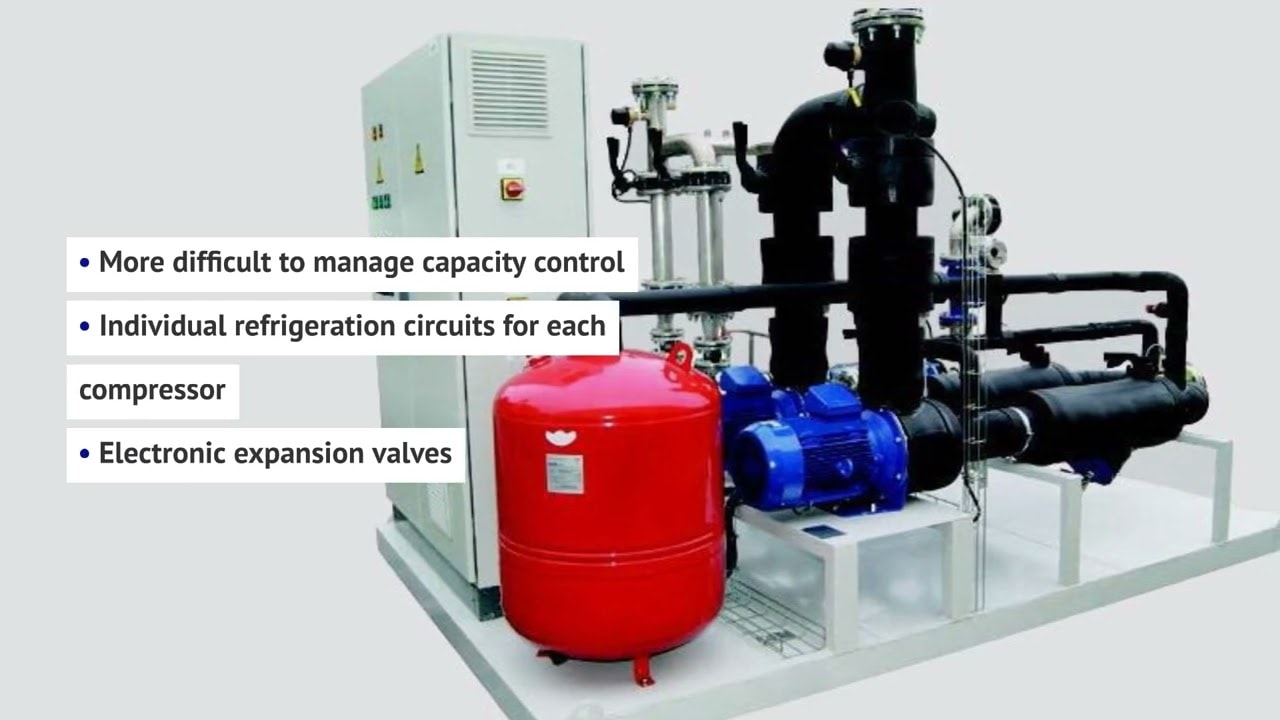
    Key features of scroll chillers include:

    • Greater operational reliability
    • Low noise emissions
    • More difficult to manage capacity control
    • Individual refrigeration circuits for each compressor
    • Electronic expansion valves
    Water Chillers

    Screw Chillers

    The major advantage offered by screw chillers comes from their ability to engage in modulated capacity control. While scroll chillers utilize stepped capacity control based on the number of compressors in a system, screw chillers use only one compressor. This means that the output capacity of that one compressor can be set anywhere within the range of 20-100%.

    Screw chillers utilize screw compressors. These compressors are available in sizes nearing 500 tons; but large screw chillers are ideal for applications where capacity exceeds 200 tons.

    The features of screw chillers include:

    • Cool efficiently according to building capacity
    • High level of energy efficiency
    • Moderate levels of noise emission (greater than scroll chillers)
    • Minimal maintenance requirements
    • Long durability horizon
    • Small footprint

    Centrifugal Chillers

    Centrifugal chillers rely on centrifugal compressors, using the principle of dynamic compression to both compress and raise the pressure of a refrigerant. A rotating impeller accelerates the refrigerant and converts velocity energy into pressure energy.

    Centrifugal chillers are the best chillers for organizations that need to cool a large amount of space. Their capacities range from 200 tons to thousands of tons depending on how many centrifugal compressors are inside of the chiller itself. These chillers offer users the most extensive form of modulated control of all three chiller varieties. Capacity may be configured by changing any of the following:

    • Number of stages
    • Compressor speeds and sizes
    • Impeller diameters
    • Refrigerant types

    The defining features of a centrifugal chiller include:

    • Very reliable
    • Highly efficient
    • Compact when operating range is taken into consideration
    • Very high noise emissions
    • Ideal for cooling larger facilities

    Compressed Air Systems supplies several nano process chillers capable of improving the efficiency of your company’s cooling applications. The distinctive closed circuit design of nano products provides users with greater control over water temperature than traditional systems and reduces system waste levels.

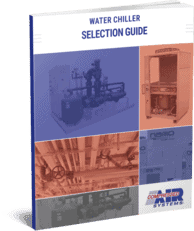
    Download our eBook, “Water Chiller Selection Guide,” for more on the three types of chillers, a view of typical configurations, and a bonus application worksheet for industrial process chillers to help you decide which chiller solution is right for your operation.

    Download the Water Chiller Selection Guide

  6. Air Compressors for Aerospace

    Comments Off on Air Compressors for Aerospace

    Air compressors support a broad range of critical functions for the aerospace sector ranging from fuel injection to metal finishing. Compressors are also a critical element in manufacturing quality control, where they help to simulate the pressures that aircraft components will endure while in flight.

    Aeronautical engineers rely on air compressors for a wide variety of applications at nearly all phases of production. As such, the selection of high-quality compressors is essential to operational success for many different functions of the aerospace sector.

    Aerospace Air Compressors Applications

    Manufacturers of aircraft components must prevent contamination. Common air compressors may mix air with lubricants, presenting a significant contamination risk for applications that require purity.

    This risk can be eliminated through the use of oil-free compressors, which see frequent use in a variety of clean rooms and manufacturing facilities for this purpose. Meanwhile, lubricated compressors still play a vital role in less demanding applications throughout the aerospace industry.

    Common air compressor aerospace applications include:

    • Potable water supply on commercial aircraft
    • Air separation
    • Electronics and galley cooling
    • Sampling and analysis of gases
    • Radioactive, toxic and costly gas processing
    • Semiconductor process gas handling
    • Oxygen and nitrogen generation
    • Waveguide dehydration and pressurization
    • Vacuum waste systems
    • General military use
    • Weapons systems development
    • Aircraft engine manufacturing
    • Structural testing of wings
    • Compressed air supply for bench testing
    • Ground support equipment

    Aerospace Air Compressors from Compressed Air Systems

    Compressed Air Systems offers a full product line of air compressors specifically designed to meet the demands of the aerospace industry. The two primary types of air compressors for these applications include rotary screw air compressors and reciprocating air compressors.

    • Rotary Screw Air Compressors

    When continuous use of large air volumes at higher pressures is common, rotary air compressors provide an optimal solution. The continuous sweeping motion of the compressor also eliminates the pulsation or surging of airflow.

    • Reciprocating Air Compressors

    Intermittent-use applications favor reciprocating compressors. Also known as a piston compressor, these units utilize the energy put into them very efficiently and tend to last longer. However, the reciprocating motion of the pistons produces pulses and surges in airflow that may be undesirable for some applications.

    Oil-Free or Lubricated

    Our oil-free compressors provide an ideal solution for demanding aerospace applications such as breathable air systems, engine startup, automatic tool changes, and aircraft manufacturing. For less demanding uses, our standard lubricated compressors feature advanced filtration and air/fluid separation systems to reduce the risk of damage to sensitive equipment and provide greater peace of mind to users.

    Air compressors play a vital role in a broad range of applications within the aerospace industry. Dependable, contaminant-free air compression contributes to the safe operation and optimal performance of equipment produced by the aerospace sector.

    Compressed Air Systems provides quality air compressors for a wide range of aerospace applications. Contact us to discuss our line of air compressors and how they can support your aerospace project.

  7. Using Air Compressors for Food and Beverage Applications

    Comments Off on Using Air Compressors for Food and Beverage Applications

    The importance of using air compressors for food and beverage processing applications cannot be overstated. Many steps of the manufacturing process benefit from the use of compressed air, such as:

    • Food mixing
    • Packaging movement
    • Pumping fluids
    • Air filtration

    This last step is arguably the most important role of air compressors in the food and beverage industry. Filtering out contaminated air is essential to creating sanitary food products, helping you preserve customer health and avoid liability.

    For this reason, air compressors used in food manufacturing environments must be held to the highest standards. For example, if your processes fill a ready-to-eat package with contaminated air, the dirt or bacteria in that air will travel directly to your customer. This poses a risk not only to them, but to your business as well.

    Therefore, choosing a dependable, efficient, and oil-free air compressor for your manufacturing application is vital for ensuring that you deliver the highest-quality products possible. Here, we outline a few of the ways you can best incorporate air compressors into your facility.

    Applications for Food and Beverage Air Compressors

    Compressed air is a powerful tool for many different applications within the food and beverage industry. Imagine a hypothetical manufacturing facility that uses compressed air for the production of yogurt. In one area of the factory, compressed air pushes flavoring powders through tubes to mix them with uncultured yogurt. In another area, compressed air supplies oxygen to the yogurt as it cultures. Once the yogurt finishes culturing, additional processes place it into containers cleaned using compressed air. Throughout these automated process, the air also opens valves and actuators for filling and bottling.

    Although this is only one example of the use of compressed air in food processing, this technique can benefit food processing applications in many different ways. Air compressors can spray oil and dispense liquids such as soft drinks, condiments, or beer. Compressed air generators can produce ozone to treat water or to generate nitrogen to create nitrogenized beer. The air can be used directly on the food as an air knife or on the packaging for agitation, transfer, or sealing.

    The uses for food-grade air compressors are almost endless. Some other applications for air compressors include:

    ● Bakeries (to spray vegetable oil)
    ● Coffee automats
    ● Packaging
    ● Mixing foods
    ● Pilot air

    Uses for Food and Beverage Air Compressors

    Because of the wide range of pressures that air compressors can generate, they can be used in many different places on your product line. Here are just a few examples of how food and beverage processors use air compressors every day:

    • As raw ingredients and materials enter a factory, compressed air sorts them based on weight
    • High-pressure compressed air peels and slices fruits and vegetables such as carrots, onions, and apples
    • Worker use compressed air to wash down packaging machines and keep the factory sanitary
    • Compressed air pushes fillings into pie crusts or other stuffed pastries
    • Diaphragm pumps move around the liquid filling to ensure even distribution
    • Low-pressure compressed air blows off crumbs from baked products
    • Workers use blow-molding to create specialized packaging
    • Compressed air cleans packages and vacuum seals food products inside
    • Cold compressed air freezes products for shipping and retail

    As you can see, compressed air is integral to every step of the manufacturing process in the food and beverage industry. Because of its usefulness, some people call compressed air the fourth utility, saying that it is just as important to manufacturing as running water, heat, and electricity.

    Learn More About the Advantages of Air Compression with Compressed Air Systems

    At Compressed Air Systems, we have the knowledge to provide you with the best air compressors to suit your manufacturing needs. We have been in business since 1963, and we sell, service, and rent all types of pneumatic tools and equipment.

    Contact us if you would like to learn more about how compressed air can help your business.

  8. Choosing What’s Right For You: Reciprocating vs. Rotary Screw Compressors

    Comments Off on Choosing What’s Right For You: Reciprocating vs. Rotary Screw Compressors

    For many businesses in a wide assortment of industries, compressed air plays a crucial role in day-to-day operations. While many business owners recognize the need and importance of air compressors, they sometimes find it difficult to decide which type of air compressor would work best for them.

    The two most common types of air compressors are reciprocating and rotary screw compressors, and each has its own unique advantages. Knowing the pros and cons of each type can help business owners make the right decision about which compressor will best fit their application requirements.

    Longevity

    reciprocating air compressor

    If you’re looking for an air compressor that will have a long lifespan, the reciprocating compressor may be a more appealing choice for you. This particular type of compressor is known for its longevity. When properly cared for and maintained, the reciprocating unit has the potential to last two-to-five times longer than a rotary unit. Therefore, while the upfront costs of a reciprocating compressor may be high, it’ll pay for itself over time.

    Initial Installation

    Reciprocating compressors are also known for their easy installation, which often means anchoring and securing the compressor to the floor to prevent it from falling or being knocked or pulled over. These types of compressors are typically used with an air receiver, which stores compressed air and helps to reduce the overall loaded run time of the compressor. However, the unbalanced forces and heavy weight associated with reciprocating compressors often translate into higher installation costs than rotary units. The need for a weighted base and a solid foundation can also contribute to increased costs.

    rotary compressorConversely, rotary compressors are designed to stand by themselves, though some units may be mounted on top of an air receiver. Some packaged rotary compressors can also be mounted using simple floor anchors. While a receiver is not always necessary to use with this type of compressor––unlike the reciprocating unit––the use of one can help to improve the control air signal being transmitted back to the compressor’s controller, which grants greater air flow consistency. This consistency is a primary benefit of the rotary screw, offering a more cost-effective solution for applications that need to maintain steady, continuous volumes of compressed air.

    Lubrication Needs

    The two types of air compressors have different lubrication needs, which impact cost differences between the two options. While rotary compressors are usually oil-free/non-lubricated units, reciprocating air compressors can be either oil/lubricated or oil-free/non-lubricated,

    Initially, a non-lubricated compressor costs approximately 10-15% more to install. Once in operation, however, power consumption costs and efficiency levels are similar to those associated with lubricated compressors. Maintenance can be the real cost differentiator, however. It may cost nearly four times as much to maintain a non-lubricated compressor over a standard lubricated compressor.

    Learn More

    Both types of compressors have their own unique advantages based on your intended application. The reciprocating compressor has grown in popularity because it has proven itself to be dependable, long-lasting, and hard-working. Ongoing technological advancements will only further enhance air quality and lengthen maintenance and repair windows. The reciprocating compressor often the best choice for applications that compress gases other than air, and that exceed or fall below the 100–150 psig range.

    Meanwhile, rotary compressors are considered tried and true by many. Their portability and versatility make them useful for a wide range of common applications. Our experts can help you decide which air compressor is best for your needs.

    At Compressed Air Systems, Inc., we specialize in providing high-quality compressed air solutions for our clients across industries and sectors. Since 1980, we’ve been committed to working toward our goal: To build the most efficient, most reliable, highest performing, easy-to-use air compressors anywhere. To lean more about our our line of rotary and reciprocating air compressors, contact us today! While you’re there, you can also learn more about our new rotary screw-powered VMAC Raptair G-30!

  9. This One Thing Could Cost Your Air Compressor Thousands

    Comments Off on This One Thing Could Cost Your Air Compressor Thousands

    Air compressors serve as essential components in a wide range of industrial and manufacturing applications. Regular compressed air maintenance is crucial for ensuring optimal performance and efficiency. Neglecting to perform regular air compressor services increases the risk of performance issues, which can result in extra expenditures as well as increased downtime. Air leakage, in particular, is one of the most costly compressed air system problems.

    Intentional and Unintentional Leaks

    No matter how big or small, air compressor leaks can be very bad for business. Below are some of the most common signs of unintentional air leakage.

    • Wear and tear is common in any type of air compressor. Over time, valves on your air compressor may loosen, allowing for air leakage. Checking the valves occasionally may help in preventing unintentional air seepage.
    • Air compressor systems rely on strong, sealed piping to release air with the right amount of pressure. Having holes in the piping or tubing of your unit can lead to multiple air compressor issues.
    • If the drain trap that funnels condensed water from your air compressor is faulty or open, air compressor leaks and water leakage can occur. These issues can also lead to more serious damage over time.

    Air compressor leaks are sometimes intentional, brought about to assist in equipment cleaning, drying, employees cleaning off clothing, sweeping floors, etc. Although these leaks are created purposefully, they can still be taxing on your system, and many users end up misusing or wasting air.

    Monitoring the frequency of intentional leaks will help in limiting the amount of wasted air. After all, your business is paying for every bit of air used.

    Where the Costs Add Up

    The biggest issue surrounding air compressor maintenance is the hidden cost of potential leaks. Most companies assume there is a higher cost associated with regular maintenance than reactionary repairs. However, an air compressor that isn’t regularly maintained will inevitably lead to higher costs over time.

    In fact, a compressor air system that isn’t regularly serviced operates on a 20% leak rate on average, and some air compressors may lose up to 30% of their air. System leaks can also lead to higher energy bills. When your compressed air system maintenance falls to the wayside, production can be affected in a big way.

    Leak Solutions

    compressed air leak detectionPerforming regular maintenance on your system is the best proactive method for handling air compressor leaks. The earlier the detection of a leak, the better.

    Make sure the company performing checks on your compressed air system does a comprehensive walk-through. They should be testing hoses, tubes, pressure regulators, and couple fittings to determine if there is leakage. They should also be utilizing sophisticated ultrasonic leak detectors.

    An ultrasonic leak detector will pinpoint the location of the leak in your air compressor or lines. Having an ultrasonic leak detector on hand may also prove useful in between scheduled maintenance checks. A tool like the Jorc Locator can detect leaks up to 33 feet away, and also provides audible and visual indications of air leakages, making it easier to find the leak.

    Stay Proactive With Compressed Air Systems

    At Compressed Air Systems, Inc., we’re here to ensure that your air compressor is in tip-top shape. Our experts are at the forefront of compressed air solutions and are well-versed in all aspects of air compressor and system maintenance and upkeep.

    For more info on how proper maintenance can save you headaches, check out our Importance of Minimizing Compressed Air Leaks Guide. Or, you can Contact one of our service team members today for help in determining whether your air compressor is in need of auditing or maintenance services.

  10. 5 Ways to Maintain a Healthy Air Compressor

    Comments Off on 5 Ways to Maintain a Healthy Air Compressor

    Although many businesses rely on compressed air to ensure optimal process performance, reliability, and safety, many companies still overlook air compressor maintenance and upkeep. Regardless of your specific industry or compressor application, air compressors often play a major role in day-to-day operations. As compressor breakdowns can result in costly, time-consuming repairs and increased downtime, proper maintenance is crucial.

    Below is a short checklist of five easy ways to avoid air compressor problems and ensure your equipment continues to run smoothly and efficiently.

     1. Drain your air receiver tank.

    Drain air from your compressor’s air receiver tank through the drain or plug located at the bottom of the compressor. When the receiver tank collects air from the machine, excess water and moisture is created and collected when in use. This is especially common during warmer seasons when there tends to be higher levels of humidity in the air. The moisture in the air is condensed in the receiver tank, adding up to large quantity of water in a short amount of time if not drained on a daily basis; receiver tank and piping damage can occur in the form of corrosion. A 25 HP/100 SCFM compressor can make 2-3 gallons of condensate per hour. Downstream, point of use equipment, can be damaged as well as improper function of the air compressor due to lack of storage capacity for the air. Ultimately an Automatic drain is recommended as well as manual bypass drain for daily inspections. There are several types of auto drains ranging from electronic timer, electronic zero-loss, auto magnetic float style.

    2. Check your hoses.

    Since the hoses in an air compressor act as the system’s key connection points, any damage to the hoses can be catastrophic to the whole system. To prevent leaks and cracks from developing, it’s important to check your hoses frequently — at least on a weekly basis. Hoses often become damaged as a result of inclement or cold weather, which can cause them to crack or corrode. Such damage then results in leaks, which can be quite costly due to reduced machine performance and expensive repair needs. Performing routine checks will help ensure that hoses remain clean and intact. And since leaks are often hard to detect, a leak-detection device can be hugely helpful for finding leaks early on — before major damage occurs.

    3. Change the air filter.

    Air filter inspections should be performed on a monthly basis and more frequently in dusty environments.  It is not recommended to clean air filters unless they are designed to be cleaned and reused.  Dirty filters restrict air flow, this makes the air compressor less efficient as well as allowing dirt and debris into the air compressor bearing and oil, causing premature failures as well as possible contamination down stream. This contamination is very crucial in the food and beverage industries, hospitals, surgery centers, labs, paint and body shop, and some manufacturing facilities.

    4. Check the fittings.

    Your fittings should be checked regularly to ensure that they’re forming a tight enough seal. Loose fittings can cause leaks to occur at one or even several sites on your air compressor. When fittings appear to be worn out or corroded, replace or repair immediately to reduce cost and inefficiencies.

    5. Have a professional service team come out.

    To save valuable time and provide some peace of mind, consider having a professional service team come out regularly to check for leaks, perform preventative maintenance, and make any needed repairs. Being proactive in scheduling routine checks and upkeep can help save time and money down the road, reducing the risk of extended downtime and costly repairs. This will also give you a more complete picture of your equipment’s health and help you anticipate any necessary fixes or issues well in advance. Plus, rather than worrying about the state of your air compressors, you’ll have more time to focus on your day-to-day business operations.

    Learn More

    Keeping your air compressor healthy is one of the best ways to ensure your equipment and operations continue to run smoothly. Compressed Air Systems specializes in all aspects of air compressor maintenance and optimization.

    Moisture buildup, in particular, is one of the most common air compressor issues, and we frequently field questions from clients on how to best avoid it. To learn how to fix air compressor moisture issues — as well as the other common problems discussed above — download our free guide to moisture content in compressed air.

Click Here to Shop Our Products